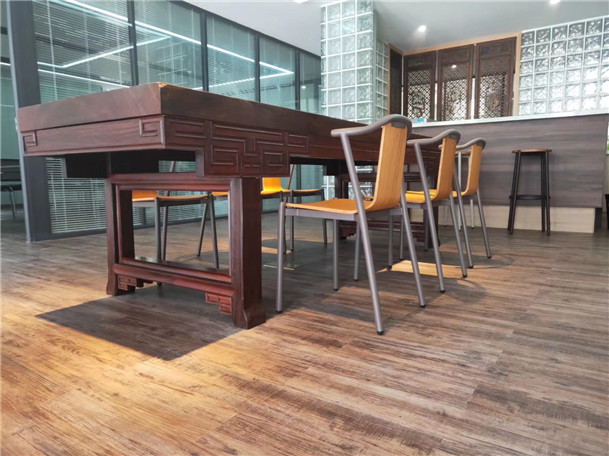
LVT is a "high-end vinyl floor", it is a new type of material, vinyl is a kind of "resilient" floor, which means that its soft texture has a little "give" when you walk on it, making it a good You can stand on the working platform for a few hours.
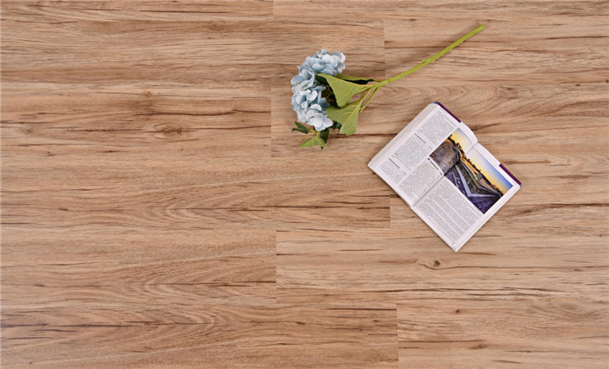
2. Durability: Most vinyl flooring has a "wear-resistant layer" (sometimes up to three) on the vinyl itself, so it can withstand normal traffic wear.
3. Humidity resistance: Vinyl flooring is completely waterproof, so it can be used almost anywhere in the home, including the main layer, upper layer and below. It works especially in bathrooms and kitchens, where water often ends up on the floor.
4. Easy to clean up: Water only needs to be on the surface of the bead, so it is easy to clean up. In addition, regular cleaning and occasional wet mopping are all it takes to keep a glue floor clean and bright.
1. Measure the area of the room
Before installing the floor, it is necessary to accurately measure the paving area of the room in order to be aware of the material loss during the entire paving process.
2. Grassroots treatment
The first step before the floor is formally laid is the grassroots treatment, which is mainly to repair the problem ground to form a new base layer to avoid the arching of the floor due to the hollow and cracks of the original base layer. After the base layer is completed, the ground needs to be leveled. If the ground is uneven, not only will the skirting line have gaps, the overall floor will also be uneven, and there will be abnormal noises, which will seriously affect the quality of the floor.
3. Leveling the ground
The level error of the ground cannot exceed 2mm, if it exceeds, find a way to level it. If the ground is uneven, not only will the skirting line have gaps, the overall floor will also be uneven, and there will be abnormal noises, which will seriously affect the quality of the floor.